Lead Forensics
Home » Industry & Applications » Molybdenum disilicide (MoSi2) heating element

Molybdenum disilicide (MoSi2) heating element

Molybdenum disilicide, commonly known as MoSi₂, is a specialist heating-element material used in extremely high-temperature furnaces and kilns.

Unlike normal-resistance elements, MoSi₂ elements have a much lower electrical resistance when cold. Their resistance rises rapidly as they heat, creating a potentially high start-up current that must be carefully controlled.

Where Are MoSi₂ Elements Used?

MoSi₂ elements are commonly found in:

  • Ceramic and glass furnaces
  • Laboratory furnaces
  • Metal heat-treatment systems
  • Sintering furnaces
  • Semiconductor processing
  • Research and test equipment
  • High-temperature production kilns

They are typically selected where process temperatures exceed the practical limits of conventional metallic heating elements.

Why Use Molybdenum Disilicide?

MoSi₂ elements offer:

  • Extremely high operating temperatures
  • Rapid heat-up capability
  • High power density
  • Strong radiant heat output
  • Good resistance to oxidation
  • Stable performance throughout their working life

At high temperatures, the element forms a protective silica layer that helps resist further oxidation.
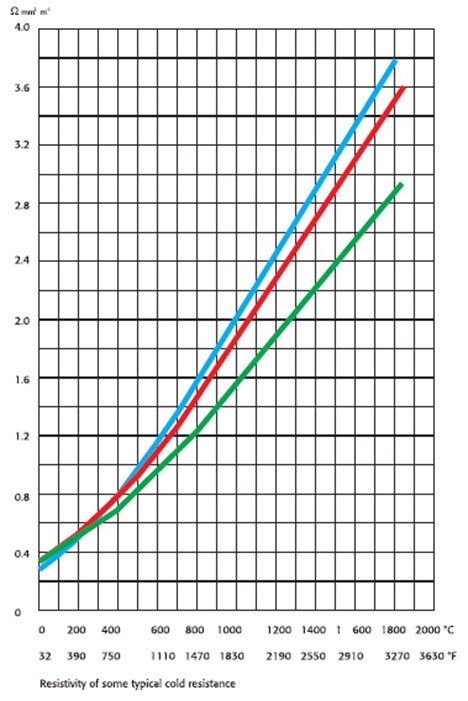
MoSi2 heating element graph

Why Are MoSi₂ Elements Difficult to Control?

When cold, an MoSi₂ element can draw considerably more current than it does at normal operating temperature.

Applying full voltage during start-up may cause:

  • Excessive inrush current
  • Transformer stress
  • Fuse operation
  • Supply-voltage disturbance
  • Damage to the element or power equipment

The controller must limit the current and increase the applied voltage progressively as the element warms.

What Is the Best Control Method?

Phase-angle firing with current limiting and soft start is normally the preferred solution.

Phase-angle control adjusts the RMS voltage during every mains cycle, allowing the element to warm gradually without excessive current.

Once the element reaches operating temperature, the controller continues to regulate the power required by the process.

Key benefits include:

  • Controlled cold start
  • Reduced inrush current
  • Smooth power delivery
  • Fast response
  • Stable furnace temperature
  • Protection for the elements and transformer

Current limiting must be configured using the element manufacturer’s electrical data.

Recommended CD Automation Controller

REVO C

REVO C provides the advanced control functions required for MoSi₂ heating applications.

Available functions include:

  • Phase-angle firing
  • Adjustable soft start
  • Current limiting
  • Voltage limiting
  • True power regulation
  • Current and voltage measurement
  • Heater diagnostics
  • Analogue control
  • PLC and fieldbus communications

REVO C can control directly connected elements or transformer-fed systems, depending on the element voltage and furnace design.

Correct Sizing Is Essential

An MoSi₂ power controller cannot be selected from heater kW alone.

To specify the correct solution, we need:

  • Supply voltage and phases
  • Element voltage
  • Hot and cold resistance
  • Maximum element current
  • Total installed power
  • Number of elements
  • Series or parallel arrangement
  • Transformer details
  • Control signal
  • Required communications

Need Help Controlling MoSi₂ Elements?

CD Automation can help you select the correct controller, current limit, firing mode and transformer arrangement for safe and reliable operation.

Speak to a Power Control Specialist

Send us your element data, electrical supply and furnace requirements.

Call 01323 811 100 or submit your application details today.

Our Address
Unit 9 Harvington Business Park, Brampton Rd, Eastbourne, BN22 9BN, UK
Need Help?
We aim to reply to email enquiries within 20 minutes (during normal working hours).
CD Automation UK Limited © Copyright 2026. All Rights Reserved.

Please send me this document

🎉 Thank you! Your download is ready.

You can access your PDF now by clicking the link below:
Inside, you’ll discover the 5 common mistakes that can affect machine performance and how to avoid them to save time, reduce downtime, and improve product quality.

🎉 Thank you! Your download is ready.

You can access your PDF now by clicking the link below:
This paper explores how integrated thyristor power and temperature
control improves heating consistency, energy efficiency, and reliability,
helping UK manufacturers reduce downtime, extend equipment lifespan,
and shift from reactive to predictive maintenance.