In the world of audio and signal processing, the importance of precision and clarity cannot be overstated. Whether you’re an audio engineer refining the sound quality of a live performance or a technician ensuring optimal signal transmission, the tools you use are crucial. Among these tools, high and low-pass filters stand out for their ability to shape and refine sound and signal quality. At CD Automation, we offer cutting-edge high and low-pass filters designed to elevate your audio and signal processing to new heights.

High and low pass filters are essential components in the realm of signal processing. They work by allowing certain frequencies to pass through while attenuating or reducing others. This selective filtering is key to managing and enhancing audio and signal quality.

The versatility of high and low pass filters makes them invaluable in various industries and applications. Here are some key areas where they play a crucial role:
The ability to filter out unwanted frequencies is fundamental to enhancing both audio and signal processing. Here’s how high and low pass filters contribute to superior performance:
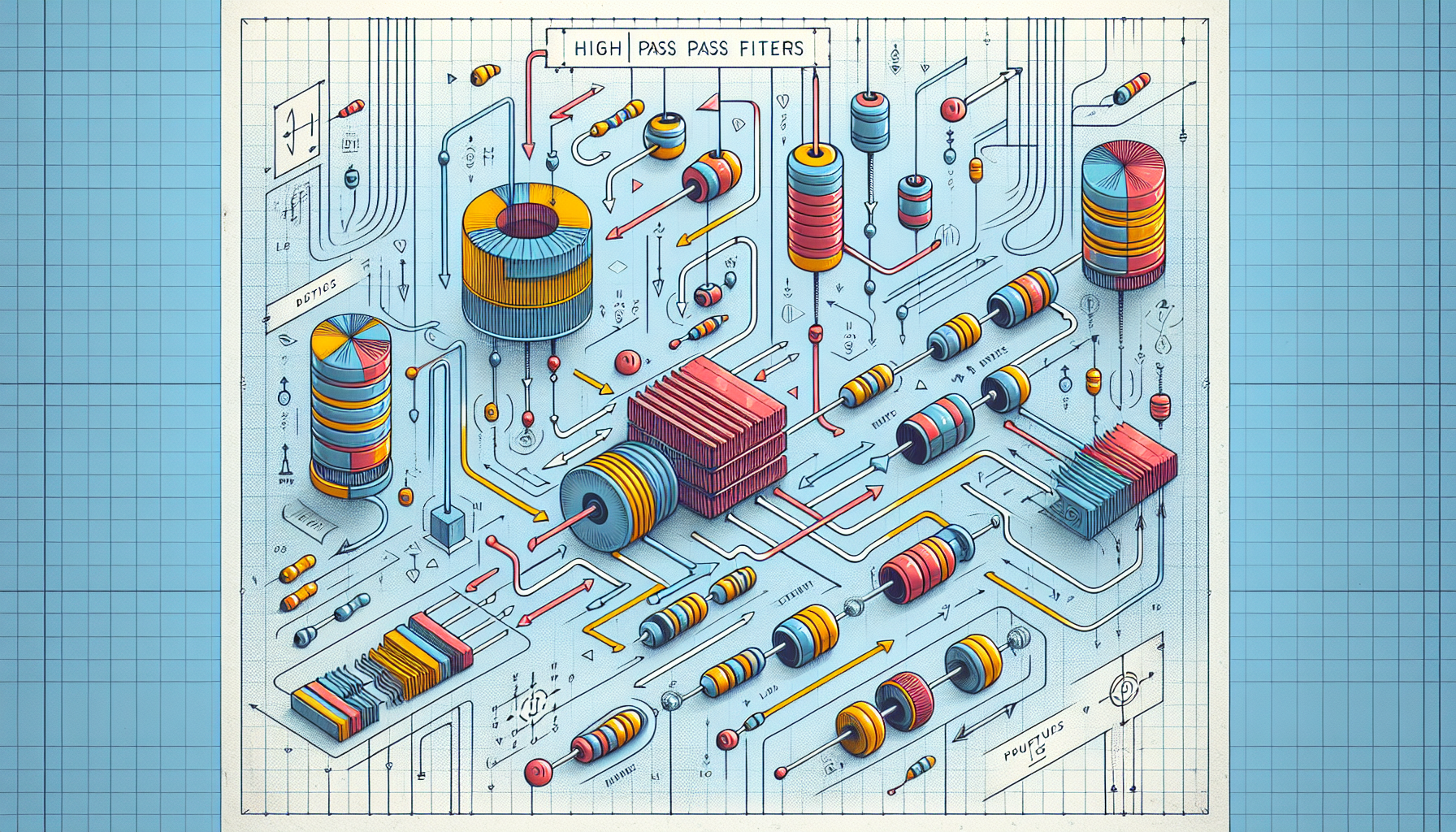
Designing high-pass and low-pass filters requires considering the intended signal amplitude and bandwidth to optimise performance. Separating low and high-frequency components on a PCB enhances performance.
Simulation tools can visualise the behaviour of filter circuits before physical implementation, aiding in efficient design. High-pass filters prevent DC signals from affecting sensitive components, but attenuation may require additional stages to reduce.
Moving from the kitchen to the factory floor, temperature control continues to play a vital role. In manufacturing, precise temperature control maximizes material properties and minimizes waste. Accurate temperature regulation turns raw materials into high-quality goods through efficient production processes, leading to better financial results and customer satisfaction.
When designing a high-pass filter, selecting high-precision, low-tolerance capacitors is essential for achieving the desired cut-off frequency. Choosing suitable components optimises filter performance.
Multi-stage RC networks can enhance filtering effectiveness but may reduce output gain. Designing reliable and efficient filter circuits is crucial for optimal performance. Simulation tools provide a clear picture of circuit behaviour, allowing adjustments before implementation.
Proper grounding techniques minimise noise and ensure signal integrity. Ensuring each stage's impedance is significantly higher than the previous one reduces loading effects in cascaded filters, enhancing overall efficiency and maintaining signal integrity.
Designing high-pass and low-pass filters comes with challenges. Proper grounding techniques ensure signal integrity and minimise noise. Maintaining an appropriate return path for audio signals is vital, especially at high frequencies where impedance takes precedence over resistance.
Incorporating tolerance considerations for components ensures the reliability of filter circuits. Matching networks composed of passive components effectively address impedance discrepancies, enhancing overall filter efficiency and maintaining signal integrity.
Managing unwanted attenuation is crucial to maintaining signal integrity in filter circuits. Using higher-quality components can significantly reduce attenuation levels. Adding multiple stages to a high-pass filter circuit can mitigate attenuation effects.
Proper component selection and circuit design can significantly reduce unwanted signal loss in high-pass filter applications. Ensuring each stage's impedance is appropriately matched helps manage attenuation and maintain desired signal quality.
Impedance matching maximises power transfer and minimises reflections in filter circuits. An impedance mismatch can lead to signal loss and degraded filter performance, making it vital to address. Common issues include signal attenuation and frequency response distortion.
Matching networks composed of passive components effectively address impedance discrepancies. Active circuit techniques, such as operational amplifiers, help achieve better impedance matching in filters. Proper impedance matching enhances overall filter efficiency and maintains signal integrity.
High and low pass filters are indispensable tools in the audio and signal processing industries. At CD Automation, our advanced filtering solutions are designed to meet the demands of professionals who require precision and reliability. By incorporating these filters into your systems, you can achieve superior signal clarity, enhanced audio quality, and greater efficiency in your operations.
Whether you’re working in audio engineering, broadcasting, telecommunications, or electronics, understanding and utilising high and low pass filters will allow you to produce better results, ensuring that your signals are always clear, concise, and free from unwanted noise.
The primary function of a high-pass filter is to permit the passage of high-frequency signals while significantly reducing the amplitude of low-frequency signals. This is essential for applications requiring clarity in high-frequency content.
A low-pass filter enhances audio quality by permitting low-frequency signals to pass while reducing higher frequencies. This results in a warmer and more balanced sound, which contributes to a more enjoyable listening experience.
When designing high-pass and low-pass filters, the cut-off frequency, phase shifts, and the choice of components must be considered, as these factors significantly impact the filter's frequency response. Ensuring optimal performance depends on careful selection and understanding of these characteristics.
Active filters provide gain and enhanced performance for signal amplification, whereas passive filters are simpler and operate without an external power source. Thus, the choice between them depends on the specific requirements of the application.
High-pass and low-pass filters enhance telecommunications by managing frequency signals, reducing noise, and improving signal integrity, which are essential for clear communication.

