When do you use 2 or 3-leg switching for 3 phase heating applications?
When switching three phase heaters, the question often comes up; should I use a 2 phase (2 leg switching) or 3 phase (3 leg switching) Thyristor Power Controller (SCR), or Solid State Relay? So how do you decide which method is the best to use? Our quick reference guide below should help.
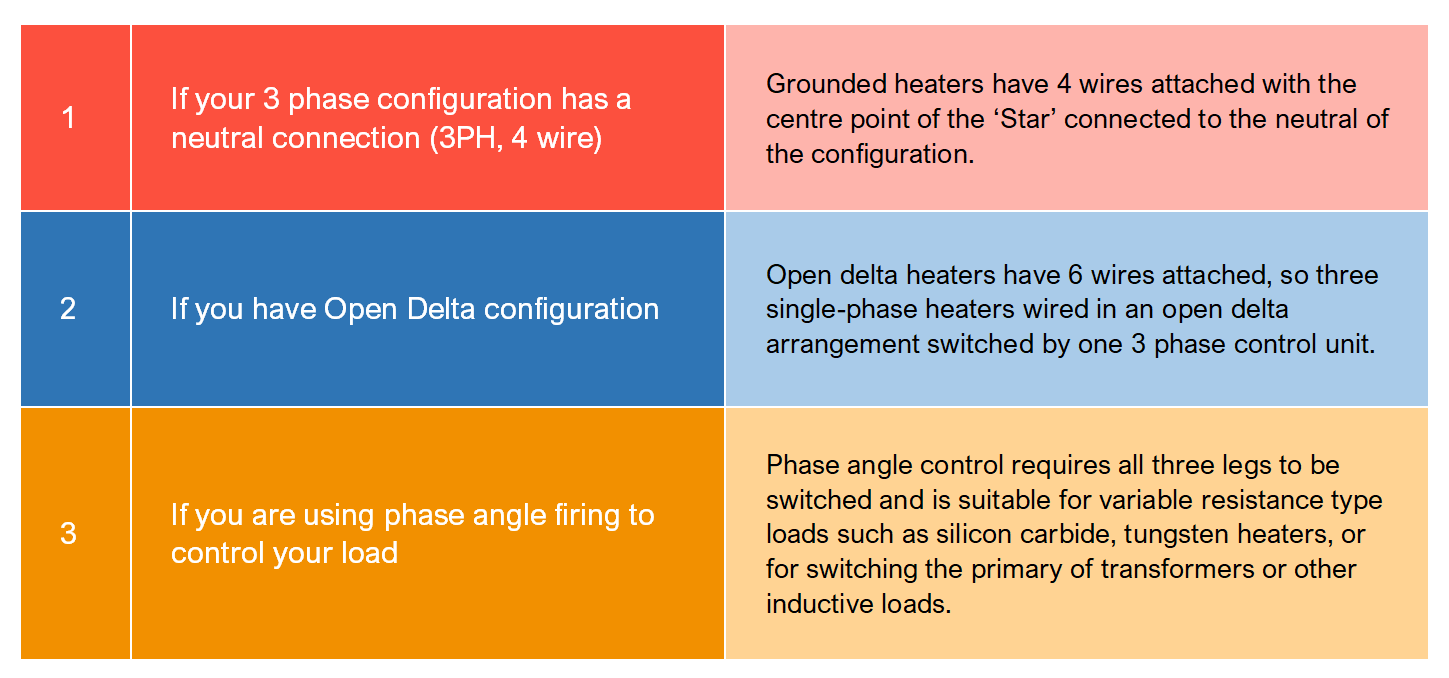
Situations when you must switch all 3-legs of a 3 phase system (3 or 4 wire configuration)
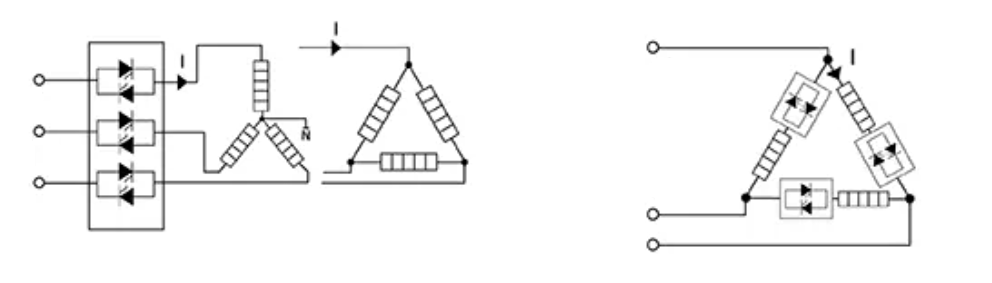
So if your load setup is not one of the above three, then switching two-legs of your 3 phase load is a possibility. When zero cross control (on/off or proportional on/off) is selected for an ungrounded normal resistance heater, it is wise to switch only two legs.
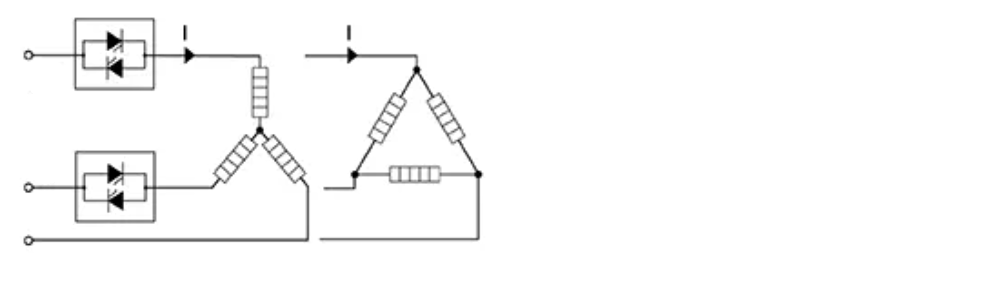
Here are two of the obvious reasons why:
- Heat Dissipation - A 3 phase two-leg unit, will produce 1/3 less heat in the enclosure than a three-leg power control. An SCR dissipates approximately 1.2 watts per ampere passing through the device. A three-leg device controlling 30 amperes dissipates 114 watts versus a two-leg device controlling the same load dissipates 76 watts.
- Cost Implication - A two-leg unit costs less to buy than a three-leg unit, simply because it only has 2 SCR semiconductors, rather than 3. In addition, semiconductor quick-blow fuses are only used in controlled legs so again a saving is made with 2 fuses instead of 3.
If you have any questions about this post or have a product enquiry, please contact us.

