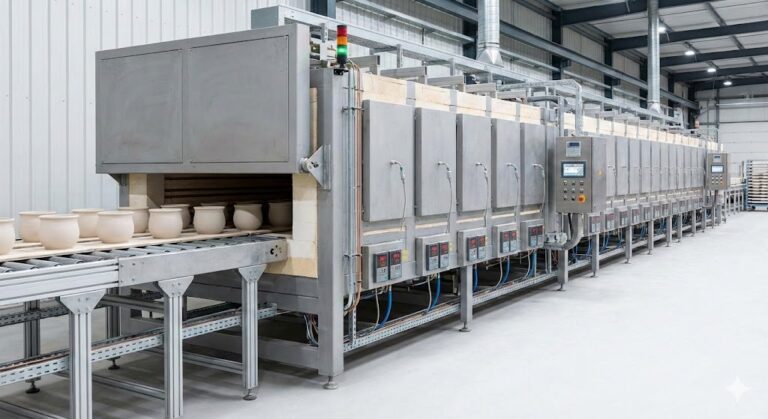
In ceramic manufacturing, the kiln is the process.
Mechanical strength, shrinkage behaviour, glaze finish and dimensional accuracy are all determined during firing. Whether operating tunnel kilns, roller hearth kilns or high-temperature batch furnaces, thermal stability directly affects yield and profitability.
Yet while significant attention is given to raw materials, airflow design and kiln insulation, one critical variable is often under-analysed:
How electrical power is delivered to the heating elements.
In high-temperature ceramic kilns using SiC or MoSi₂ elements, incorrect power control strategy can shorten element life dramatically and introduce unnecessary thermal instability.
Ceramic kilns commonly use:
Each behaves differently electrically, particularly during cold start.
Molybdenum Disilicide (MoSi₂)
MoSi₂ elements have:
If full voltage is applied instantly at cold start, extremely high inrush current can occur. This can cause:
For this reason, phase-angle soft start with current limiting is standard engineering practice in MoSi₂ kiln systems.
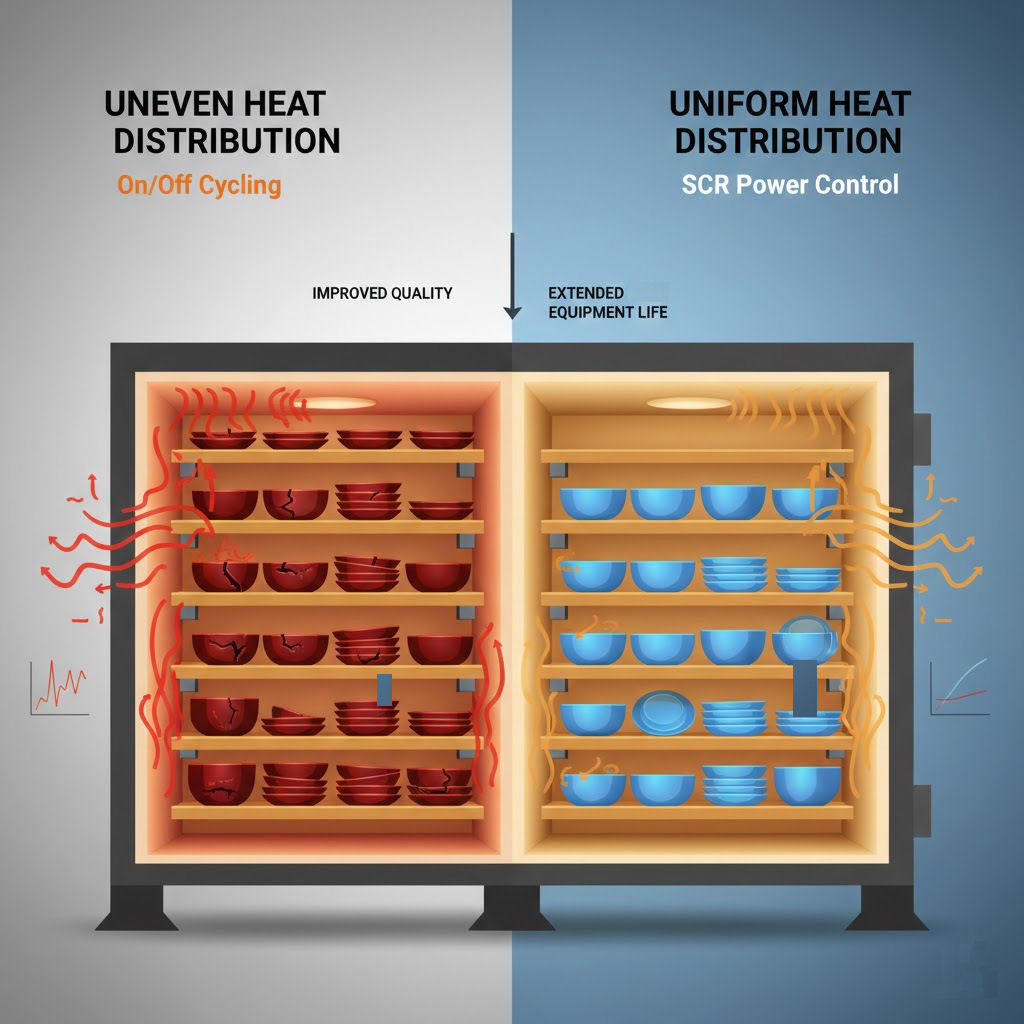
SiC elements:
Applying uncontrolled full-voltage switching increases:
Again, controlled ramp-up using phase-angle SCR control significantly reduces stress during energisation.
These elements have a positive temperature coefficient and lower cold resistance than at operating temperature. While less extreme than MoSi₂, high-power industrial installations still benefit from:
In large kilns, simple contactor-based full-voltage energisation can generate unnecessary mechanical and electrical stress.
An SCR (thyristor) power controller regulates AC power by modulating the waveform.
In high-temperature ceramic kilns, phase-angle control during warm-up allows:
Controllers such as REVO C allow configuration of:
This flexibility allows kiln behaviour to be matched to element type and process sensitivity.
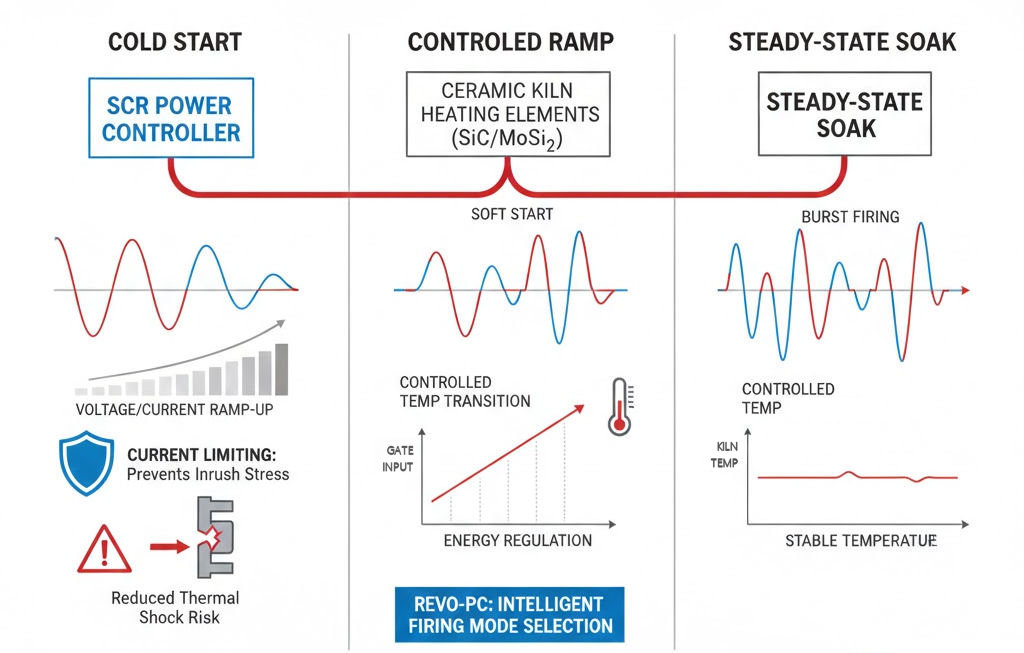
In many well-designed kiln systems, control strategy may vary by operating phase:
The key is not simply “proportional control” it is intelligent firing mode selection based on element physics.
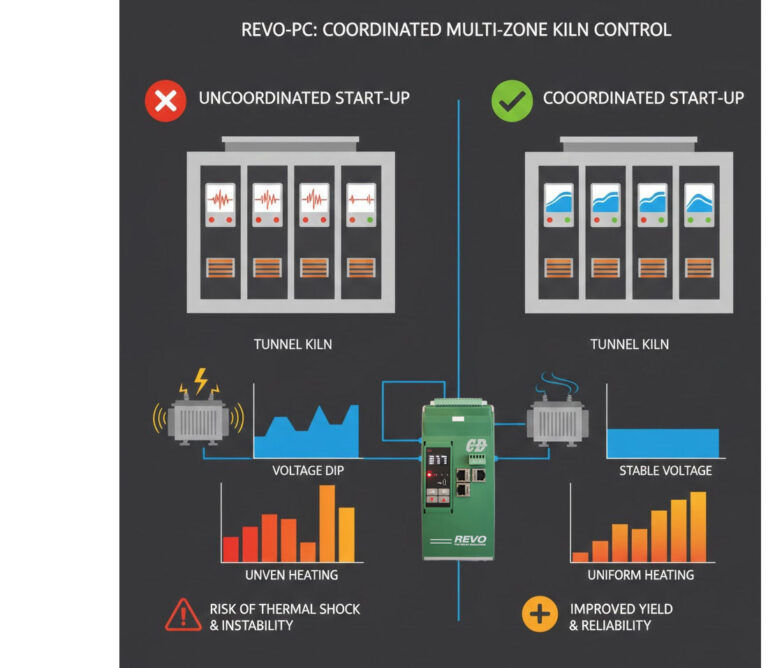
Modern tunnel kilns can contain dozens of heating zones across preheat, firing and cooling sections.
Common electrical challenges include:
Using a coordinated architecture such as REVO-PC, multiple SCR zones can be sequenced and balanced intelligently.
REVO-PC enables:
This improves both electrical infrastructure stability and firing uniformity.
High-temperature elements operate close to material limits.
Uncontrolled cycling accelerates:
REVO controllers include:
In SiC systems where resistance changes over life, current monitoring helps identify imbalance before it affects firing uniformity.
For maintenance teams, this allows planned replacement rather than reactive shutdown.
Ceramic materials pass through critical transformation ranges during firing.
Uncontrolled overshoot or oscillation in these windows can cause:
Precise ramp control using phase-angle SCR modulation supports:
In technical ceramics, this level of control directly affects product performance and rejection rates.
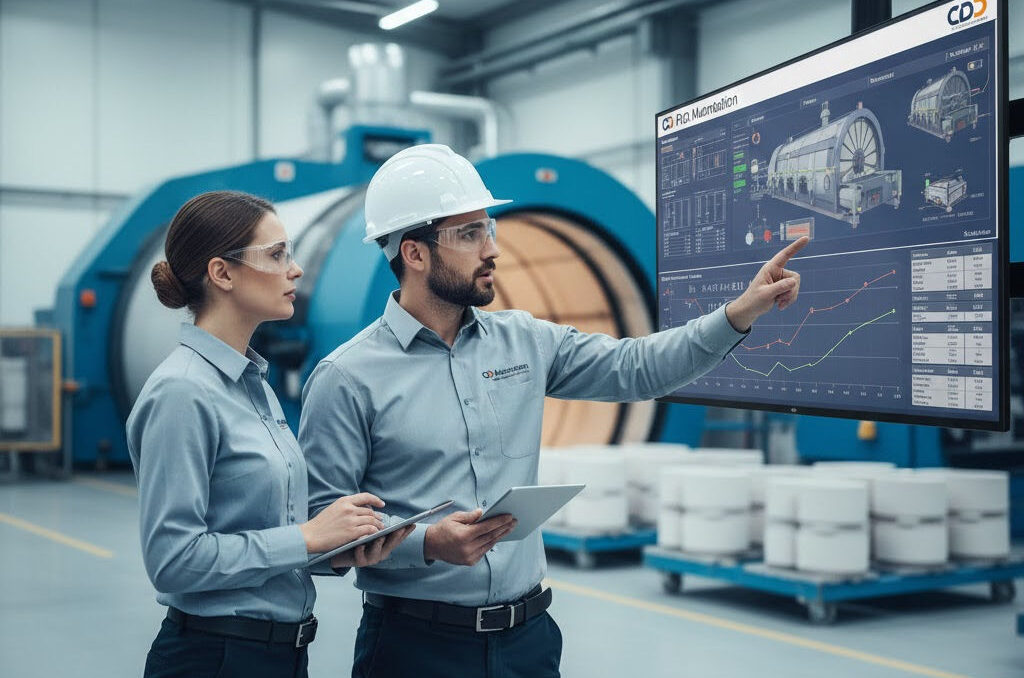
In ceramic manufacturing, firing stability depends not only on airflow and insulation but on how electrical energy is delivered to heating elements.
Industrial SCR (thyristor) power controllers such as REVO S, REVO C and REVO-PC provide:
For kiln operators experiencing premature element failure, electrical instability or firing inconsistency, reviewing heater control strategy can deliver measurable improvements in reliability and product uniformity.
If you operate high-temperature kilns using SiC or MoSi₂ elements and want to improve element lifespan, ramp stability or multi-zone coordination, CD Automation can provide application-specific SCR power control solutions.
Our technical team can assist with:
Contact CD Automation to discuss your kiln heating control requirements and identify the most appropriate REVO solution for your application.
Further information on Ceramics, Technical Ceramics & Tile Manufacturing can be found on our Industry page here.
Or contact our engineering team to assess your current heating control strategy.
Click the link in the page footer below to ‘Book a telephone callback’, or click the ‘Contact Us' button to request a no-obligation quotation, or simply ask a question. We're here to help.

