
Industrial furnace design begins with a fundamental challenge: delivering large amounts of energy in a controlled and repeatable way.
Heat treatment, forging furnaces and high-temperature processing systems all require precise thermal control across significant power levels. At the same time, these systems must operate reliably under continuous or cyclic loading conditions.
For OEMs, the complexity lies not just in generating heat, but in managing how electrical power is distributed, controlled and adapted across the entire furnace system.
Achieving this balance requires careful alignment between electrical design, heating elements and process requirements.

Modern furnaces rarely operate as a single heating zone.
Instead, they use multiple independently controlled zones to manage temperature profiles across the chamber. Each zone must respond to local conditions while contributing to overall process stability.
In large systems, this creates challenges such as:
Designing a stable system requires coordinated power delivery, where each zone receives the correct energy input without introducing imbalance or instability.
As furnace size and power increase, the electrical architecture becomes more complex.
High-power systems often use:
These configurations introduce additional considerations, particularly around how loads respond to switching and control.
Transformers are commonly used to supply high-current heating elements.
However, they introduce inductive characteristics that affect how power should be applied. Sudden switching can create electrical stress, voltage disturbance and reduced system stability.
Using phase angle firing allows smooth energisation of transformer-fed loads, reducing electrical disturbance and improving overall control.
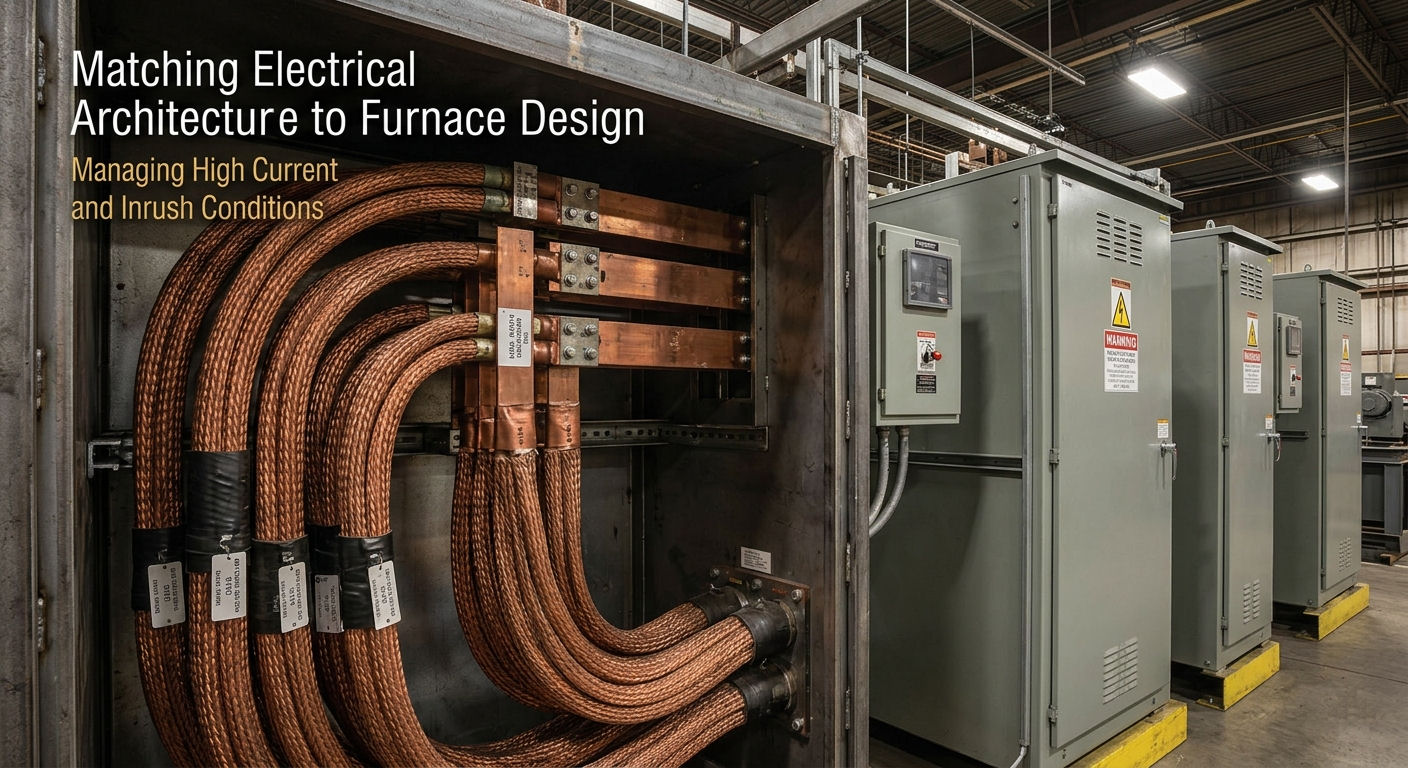
This photograph focuses specifically on the substantial electrical infrastructure required for high-power furnace applications.
Large heating systems can draw significant current, particularly during start-up.
Cold elements often have lower resistance, which leads to high inrush current when power is first applied.
Without proper control, this can:
Power controllers that support current limiting and controlled ramp-up help manage these conditions, ensuring safe and stable start-up behaviour.
Furnace performance depends heavily on the characteristics of the heating elements.
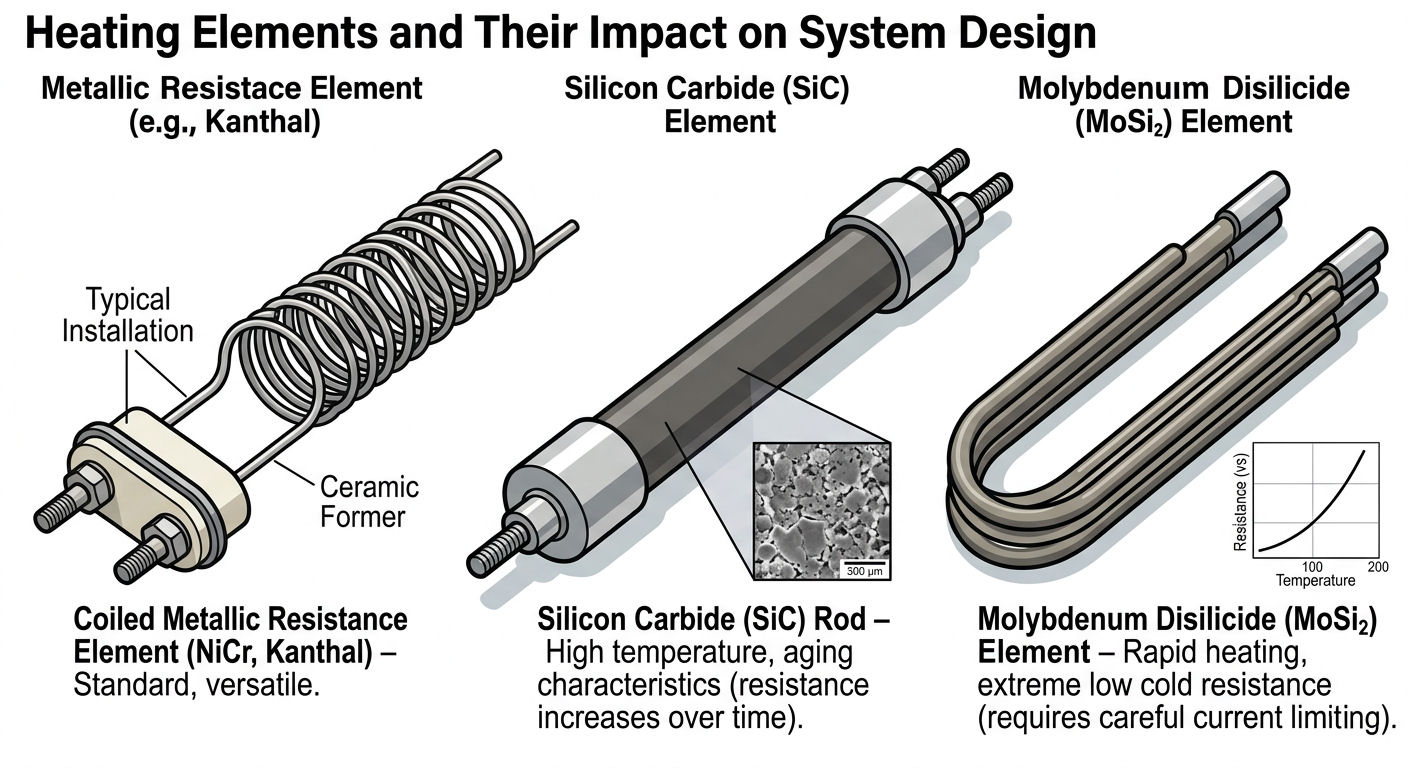
Common element types include:
Each type behaves differently, particularly during start-up and high-temperature operation.
MoSi₂ elements require careful current control due to low cold resistance, while SiC elements change resistance over time as they age.
These behaviours must be considered when selecting power control strategies, as incorrect control can lead to reduced element life and unstable operation.
Matching the control method to the element type ensures both performance and longevity.
Furnace instability rarely comes from temperature control alone.
It often begins at the point where electrical energy enters the system.
If power is applied unevenly or in large steps, it can introduce thermal fluctuation across zones. In large furnaces, these small variations can accumulate, leading to:
More refined power delivery helps maintain stable energy input, allowing the furnace to respond predictably to control signals.
Industrial furnaces operate under demanding conditions, often with continuous or high-cycle operation.
Reliability becomes a critical design factor, particularly in large systems where downtime can have significant cost implications.
Mechanical switching devices degrade over time due to electrical arcing and repeated operation.
Replacing these with solid-state power control improves reliability and reduces maintenance requirements.
Modern power controllers provide early fault detection, allowing issues such as element failure or abnormal load conditions to be identified early.
This supports predictive maintenance strategies and reduces the risk of unexpected system failure.
Large furnace systems generate valuable data that can be used to improve performance.
Power controllers provide real-time monitoring of current, voltage and load conditions, giving engineers visibility into how the system behaves during operation.
By analysing this data, engineers can identify imbalance between zones, detect developing issues and optimise system performance.
Furnaces represent a major energy consumer in metals processing.
Integrated energy monitoring and totalisation allow operators to track consumption, improve efficiency and better understand operating costs.
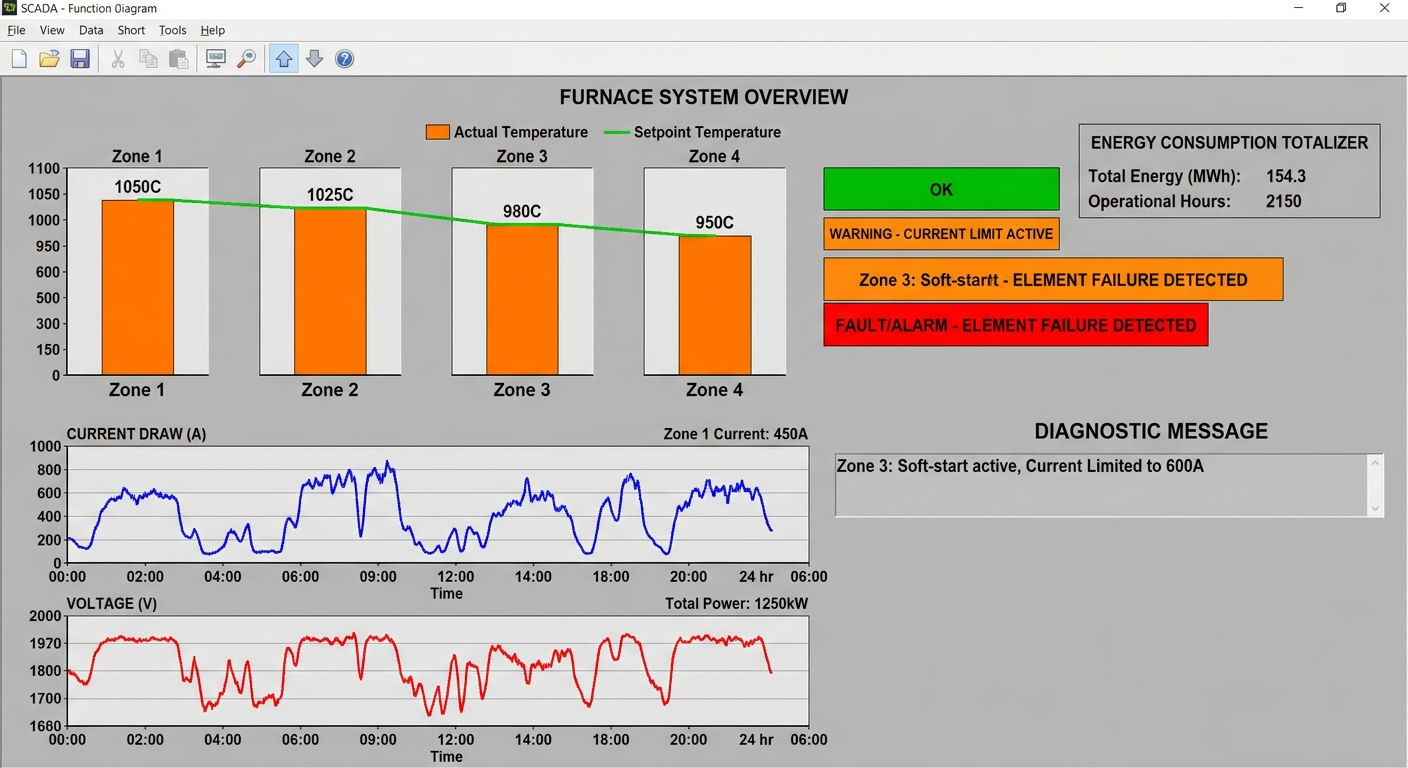
Modern furnace systems form part of a wider automation environment.
Power controllers that support Profinet and Profibus integrate directly with PLC and SCADA systems, allowing centralised monitoring and control of heating performance.
This enables coordinated operation across multiple zones and ensures that the heating system responds in line with process requirements.
Integration also simplifies diagnostics and improves overall system transparency.
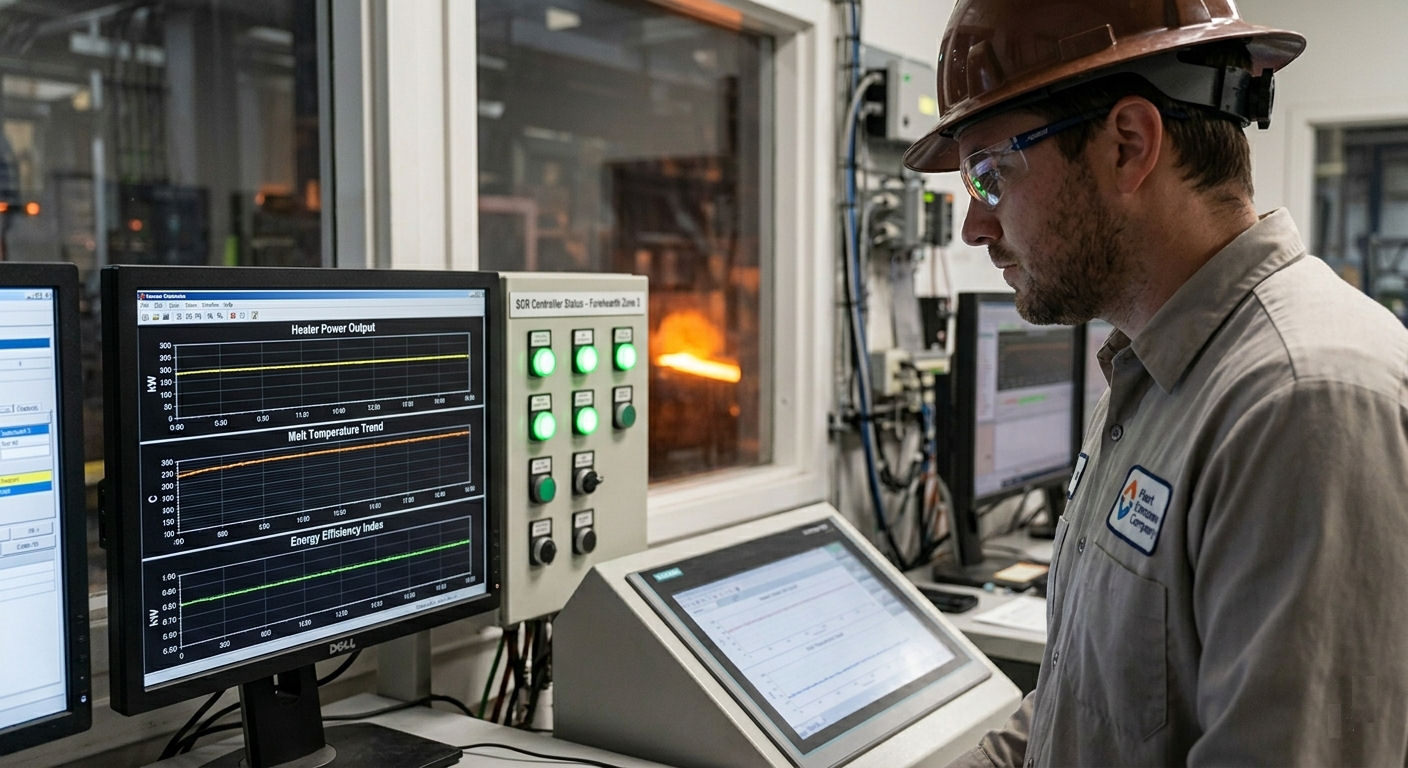
By aligning electrical design, power control strategy and heating element behaviour, OEMs can build furnace systems that scale effectively while maintaining stability.
This enables:
In high-power applications, where small inefficiencies can scale into significant issues, this level of control becomes essential.
Selecting the right power control approach requires a clear understanding of both the electrical and thermal aspects of the system.
High-power furnaces, transformer-based loads and advanced heating elements all demand tailored control strategies.
CD Automation’s thyristor power controllers, including REVO S, REVO C and REVO RT, are designed to support these requirements.
These systems provide advanced firing modes, current limiting, early fault detection, energy monitoring, real-time visibility and seamless integration with industrial control systems.
This allows OEMs to design furnace systems that deliver stable performance, improved reliability and efficient operation at scale.

If you are designing industrial furnaces and need to improve system stability, manage high-power loads or optimise electrical performance, CD Automation can support you in selecting the most appropriate power control solution.
Contact CD Automation to discuss your heating application or arrange a technical review of your system.
Further application information can be found on our Metals, Steel Production & Heat Treatment page.
Or contact our engineering team to assess your current heating control strategy.
Click the link in the page footer below to ‘Book a telephone callback’, or click the ‘Contact Us' button to request a no-obligation quotation, or simply ask a question. We're here to help.
