
Paper and coating processes depend on maintaining control across a moving, continuously changing product.
As coatings are applied and dried, heat drives evaporation, bonding and surface formation. The process must remain stable across the full machine width and throughout the production run.
When thermal conditions drift, the effects appear quickly, often as visible defects, inconsistent coating weight or variation in surface finish.
For operators, maintaining stable heating is not just about process control. It directly affects product quality, waste levels and overall machine performance.
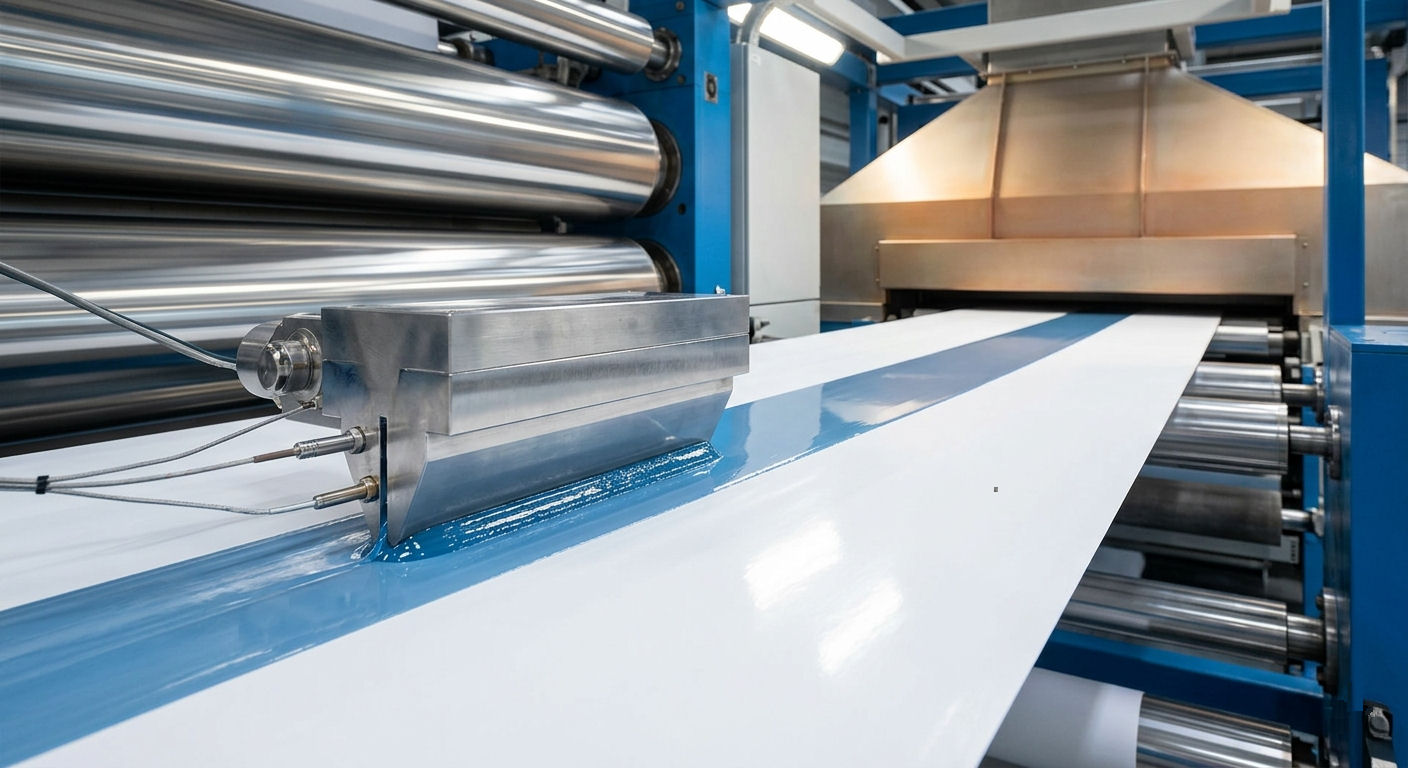
Temperature controllers regulate the process, but the way power is delivered determines how stable that temperature really is.
If heating systems apply power in large or uneven steps, they introduce small fluctuations in heat output. In high-speed processes, these fluctuations can affect drying rates and coating behaviour almost immediately.
More controlled power delivery allows heat to be applied smoothly, reducing variation and helping maintain stable process conditions across the entire line.
Paper and coating lines rarely operate under fixed conditions.
Operators must manage:
Each change affects how heat must be applied.
If the heating system cannot respond smoothly, the process may become unstable during transitions, leading to increased waste and reduced efficiency.
Power control systems that support smooth and responsive adjustment help maintain stability even as operating conditions change
Coating and converting lines operate under tight process conditions, where heat influences how materials behave in real time.
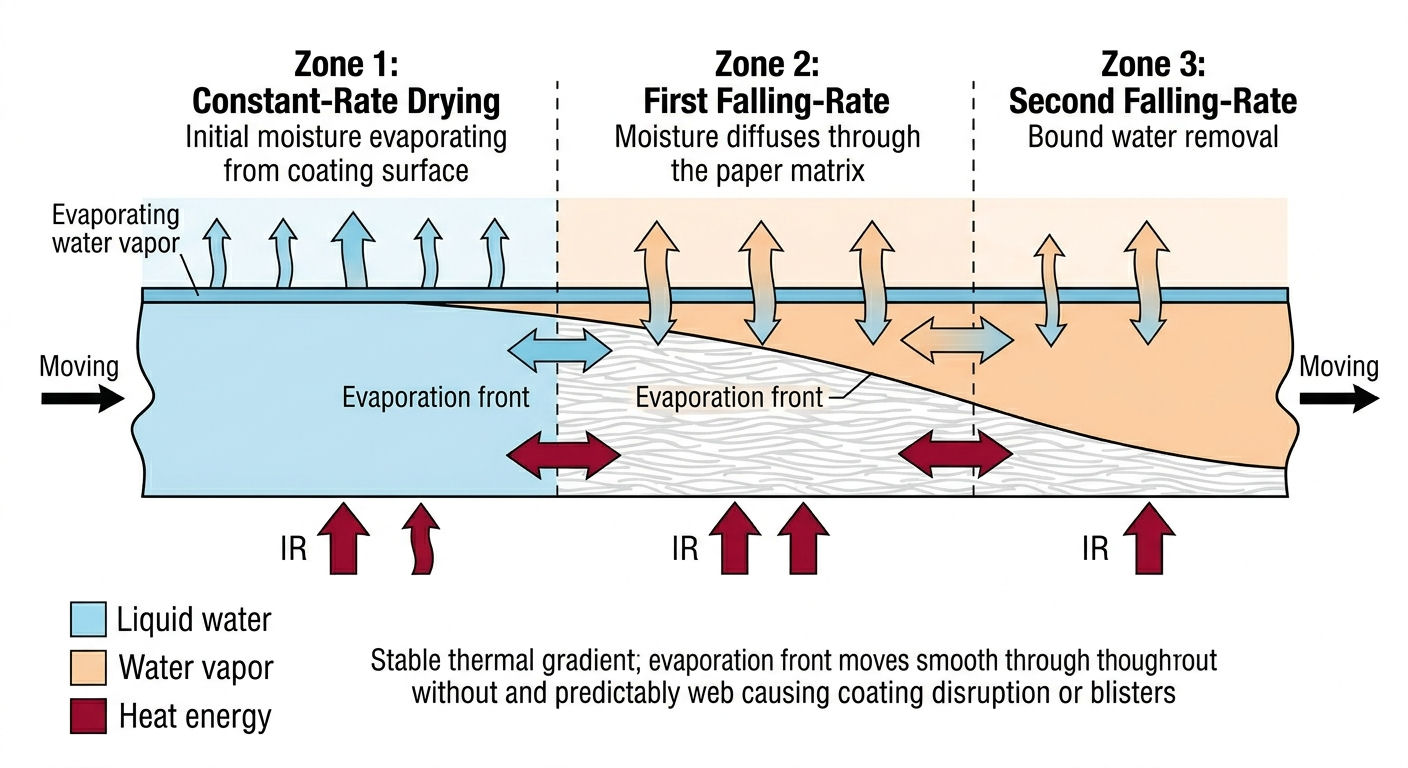
Drying must remove moisture or solvent at a controlled rate.
If heat input becomes unstable, drying can occur too quickly or unevenly. This affects how the coating forms on the substrate, leading to:
Because the web moves continuously, these issues can affect large volumes of product before they are detected.
In laminating and converting processes, heat activates adhesives and influences bonding strength.
Temperature variation can lead to inconsistent bonding, resulting in weak adhesion or product failure.
Stable heating ensures that adhesives behave predictably and consistently.
Temperature also affects the physical behaviour of the web.
Uneven heating can cause tension variation, distortion or instability in the material as it moves through the machine.
Maintaining consistent thermal conditions helps stabilise the web and supports smooth machine operation.
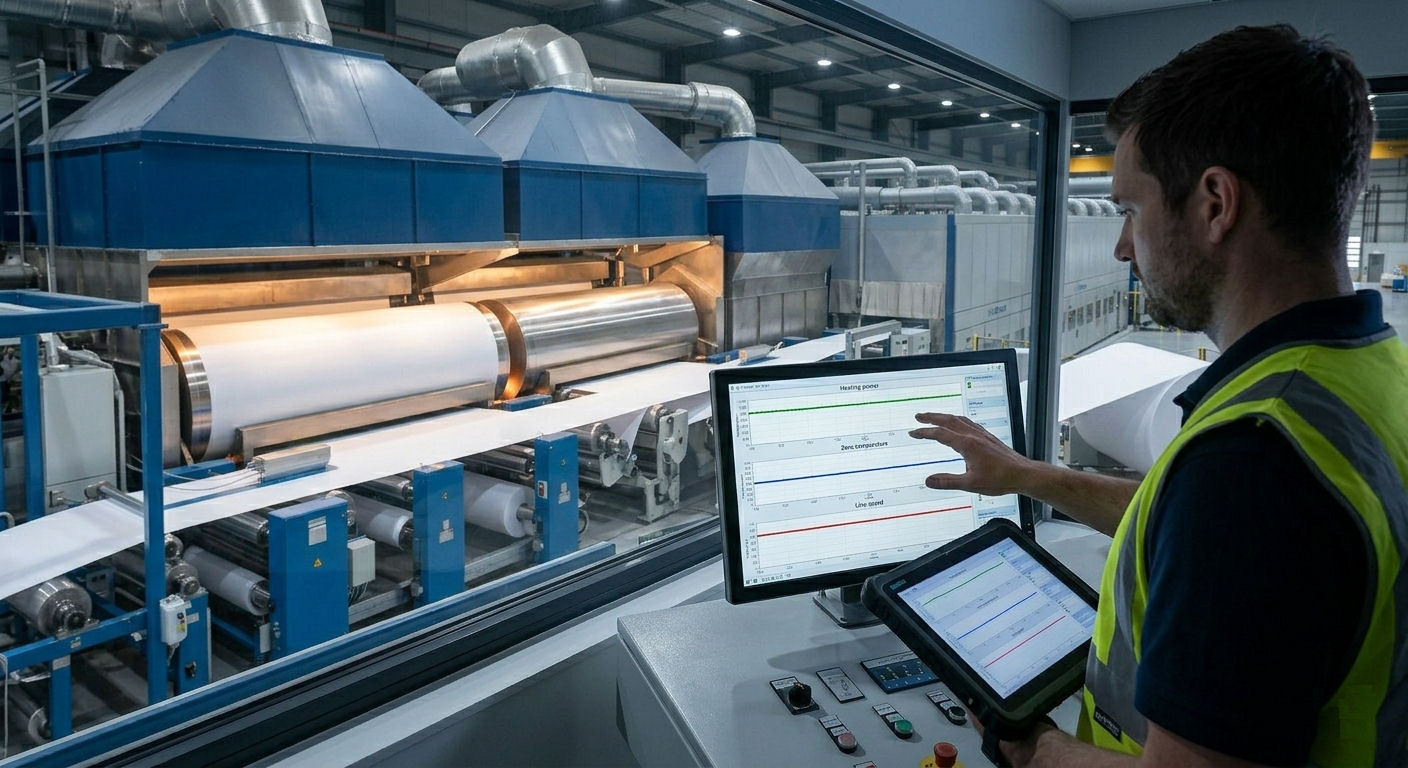
Maintaining consistent production requires visibility into how the system is performing.
Modern power controllers provide real-time operating data, allowing engineers to monitor heating behaviour and identify instability.
Historical data logging allows operators to track performance over time, identify trends and refine process conditions.
This supports continuous improvement and helps reduce variability.
Drying systems consume significant amounts of energy.
Integrated energy monitoring and totalisation allow operators to understand consumption, identify inefficiencies and improve overall process efficiency.
Coating lines are designed for continuous production, often at high speed.
Any interruption can lead to:
Heating system failures, particularly those caused by worn switching components, can stop the process or reduce performance.
Mechanical contactors degrade over time due to frequent operation. As reliability decreases, the likelihood of failure increases.
Modern power controllers remove these mechanical wear points and provide more reliable operation.
They also include early fault detection, allowing heater issues to be identified before they affect the process.
This enables maintenance teams to act proactively, reducing the risk of unplanned downtime.
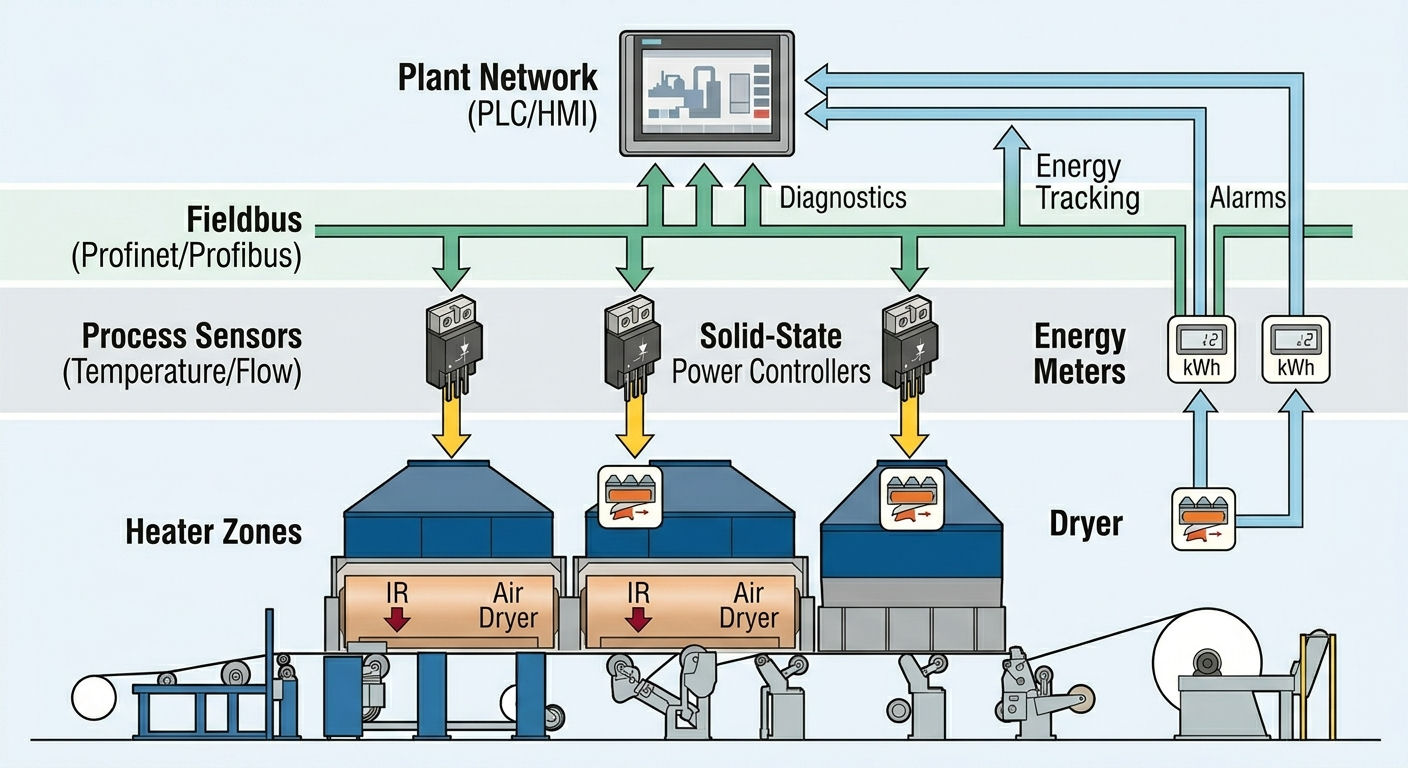
Coating and converting lines rely on coordinated control across multiple systems.
Power controllers that support Profinet and Profibus integrate with PLC systems, allowing heating performance, alarms and diagnostics to be monitored centrally.
This ensures that heating systems operate in alignment with line speed, product type and process requirements.
It also improves troubleshooting by providing clear visibility of system behaviour within the overall control environment.
Stable heating plays a direct role in improving both product quality and production efficiency.
By improving how heat is delivered and controlled, operators can achieve:
In high-speed processes where small variations can quickly scale into significant losses, this level of control becomes a key driver of performance.
Coating and converting processes require heating systems that can deliver stable, responsive and coordinated performance.
The power control solution must match the application, the heating method and the operating conditions.
CD Automation’s thyristor power controllers, including REVO S, REVO C and REVO PC, provide advanced firing modes, diagnostic capability and full communication support.
These systems deliver stable power control, early fault detection, energy monitoring, real-time visibility and seamless integration with industrial control systems.
This allows operators to maintain consistent process conditions, reduce waste and improve overall production performance.

If your coating or converting process is affected by variability, waste or unplanned downtime, CD Automation can support you in selecting the most appropriate power control solution.
Contact CD Automation to discuss your heating application or arrange a technical review of your system.
Further application information can be found on our Pulp, Paper, Coatings & Printing Industries page.
Or contact our engineering team to assess your current heating control strategy.
Click the link in the page footer below to ‘Book a telephone callback’, or click the ‘Contact Us' button to request a no-obligation quotation, or simply ask a question. We're here to help.
