Flow assurance sits at the centre of many oil and gas operations.
Fluids such as crude oil, bitumen and heavy hydrocarbons change behaviour rapidly as temperature drops. Viscosity increases, flow becomes restricted and, in some cases, materials can begin to solidify within pipelines or storage systems.
Once this happens, restoring flow becomes difficult, time-consuming and expensive.
Maintaining stable and reliable heating is therefore essential, not just for efficiency, but for keeping operations running safely and continuously.
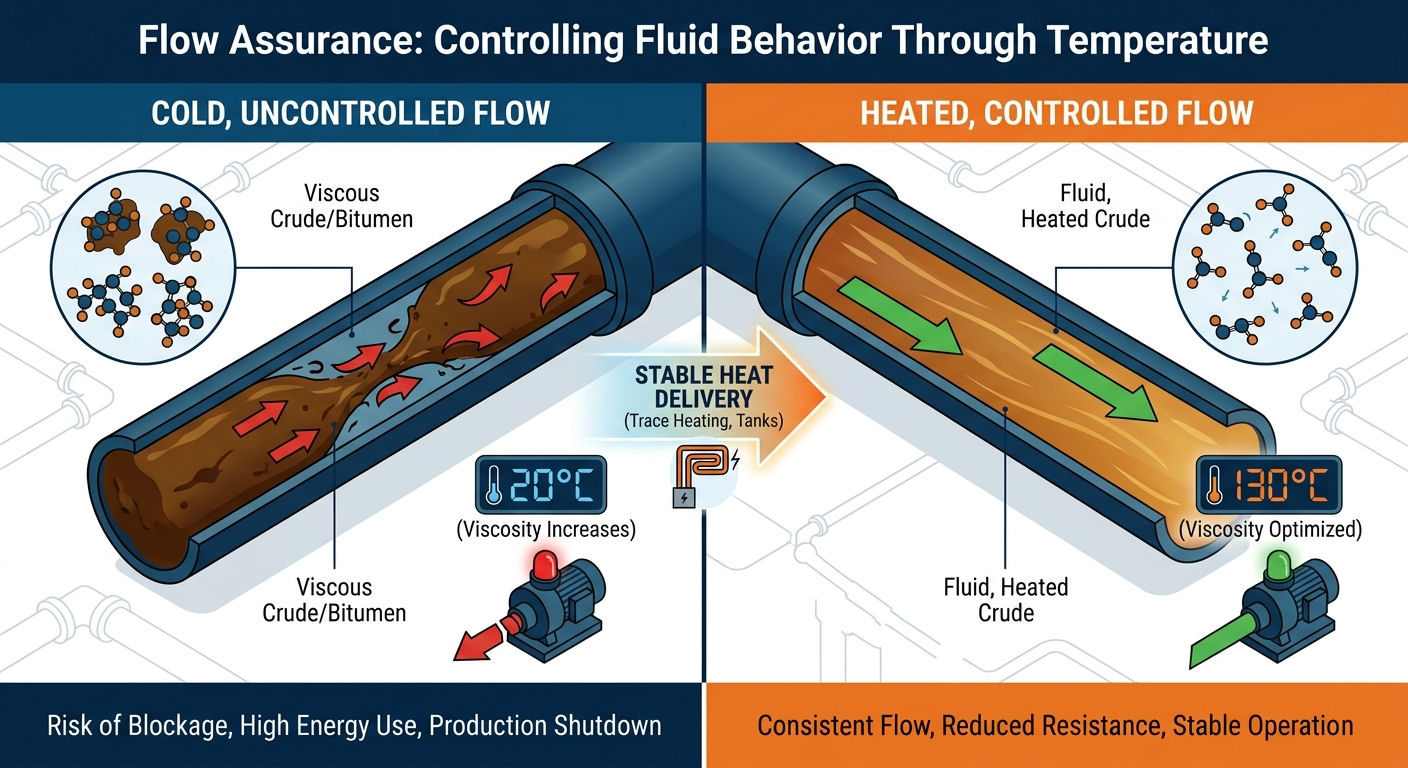
Temperature influences how fluids behave at every stage of handling, transfer and storage.
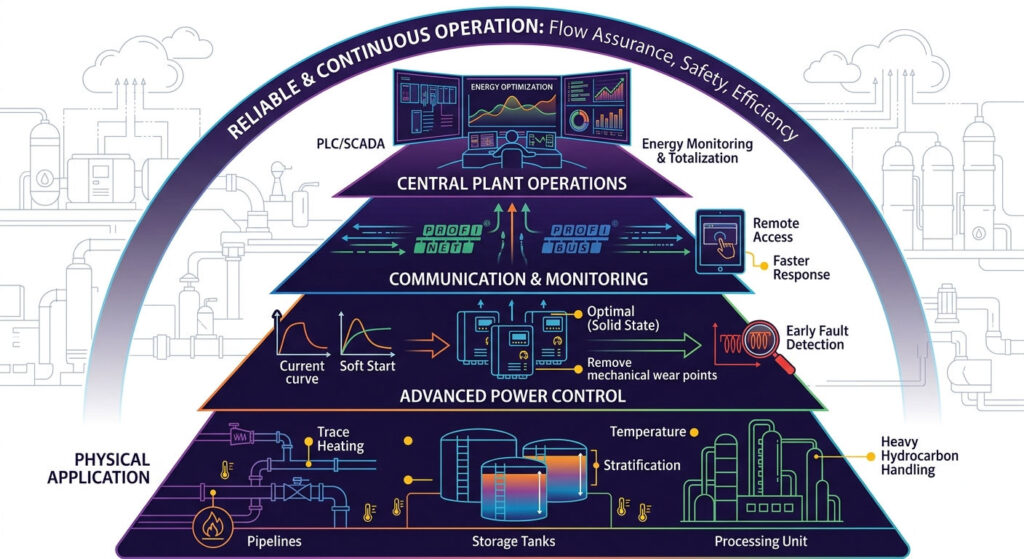
Pipelines rely on trace heating to maintain temperature along their length.
If heat input drops, even locally, fluid viscosity can increase quickly. This creates resistance to flow and, in extreme cases, can lead to partial or complete blockage. Stable heating ensures consistent flow conditions and reduces the risk of intervention.
Storage systems often hold viscous materials that require heating to remain pumpable.
Temperature variation within a tank can create stratification, where some areas cool faster than others. This leads to uneven viscosity and can complicate transfer operations.
Consistent heat delivery helps maintain uniform conditions throughout the vessel.
Bitumen and heavy oils present one of the most demanding heating challenges.
These materials require sustained, stable heating to remain fluid. Any interruption can quickly affect handling, leading to delays or shutdowns.
Reliable heating systems are critical to maintaining continuous operation in these applications.
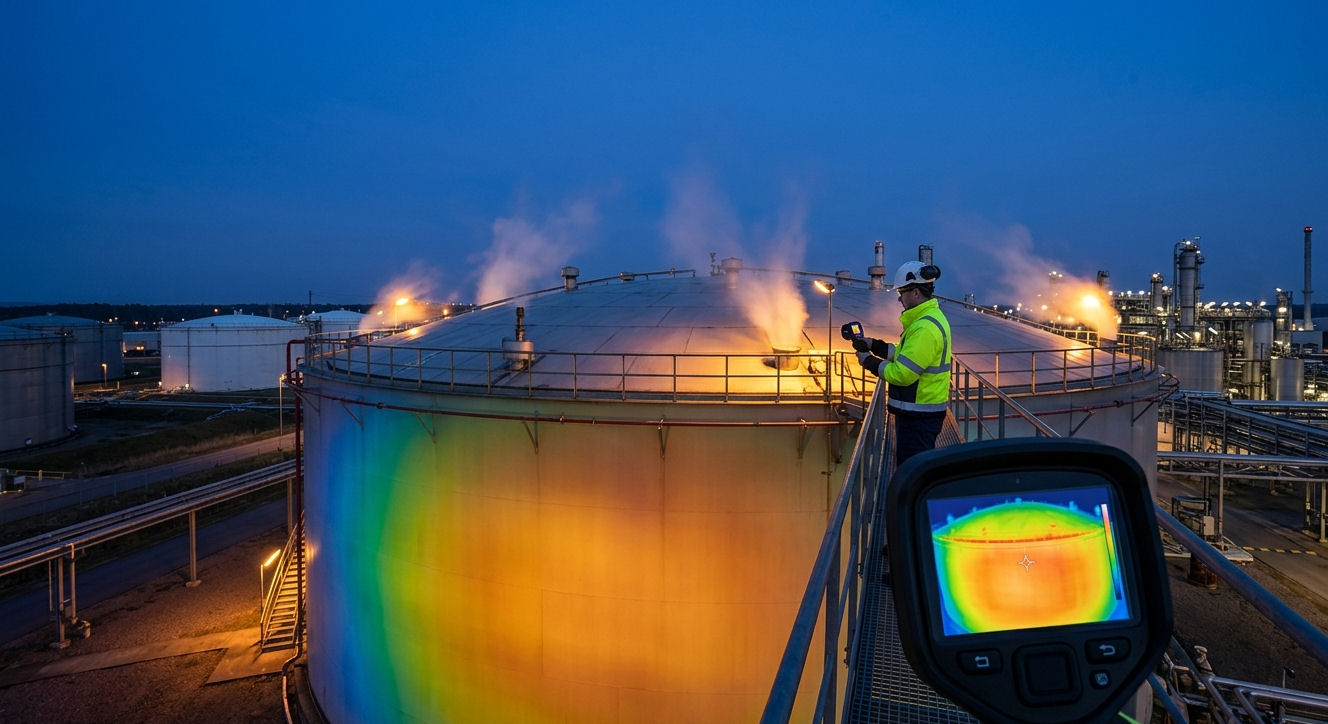
Oil and gas systems often operate in remote, offshore or hazardous locations.
In these environments, access for maintenance is limited, and intervention can be costly or difficult to schedule.
If heating systems become unstable, operators may face:
Because conditions can change quickly, maintaining stable heat input becomes a key part of operational risk management.
Temperature controllers regulate the target conditions, but the way electrical power is applied determines how effectively those conditions are maintained.
If power is delivered unevenly or in large steps, it can introduce fluctuations in heat output. In flow assurance applications, even small variations can influence fluid behaviour.
More controlled power delivery allows heat to be applied smoothly, helping maintain stable temperature conditions across pipelines, tanks and process systems.
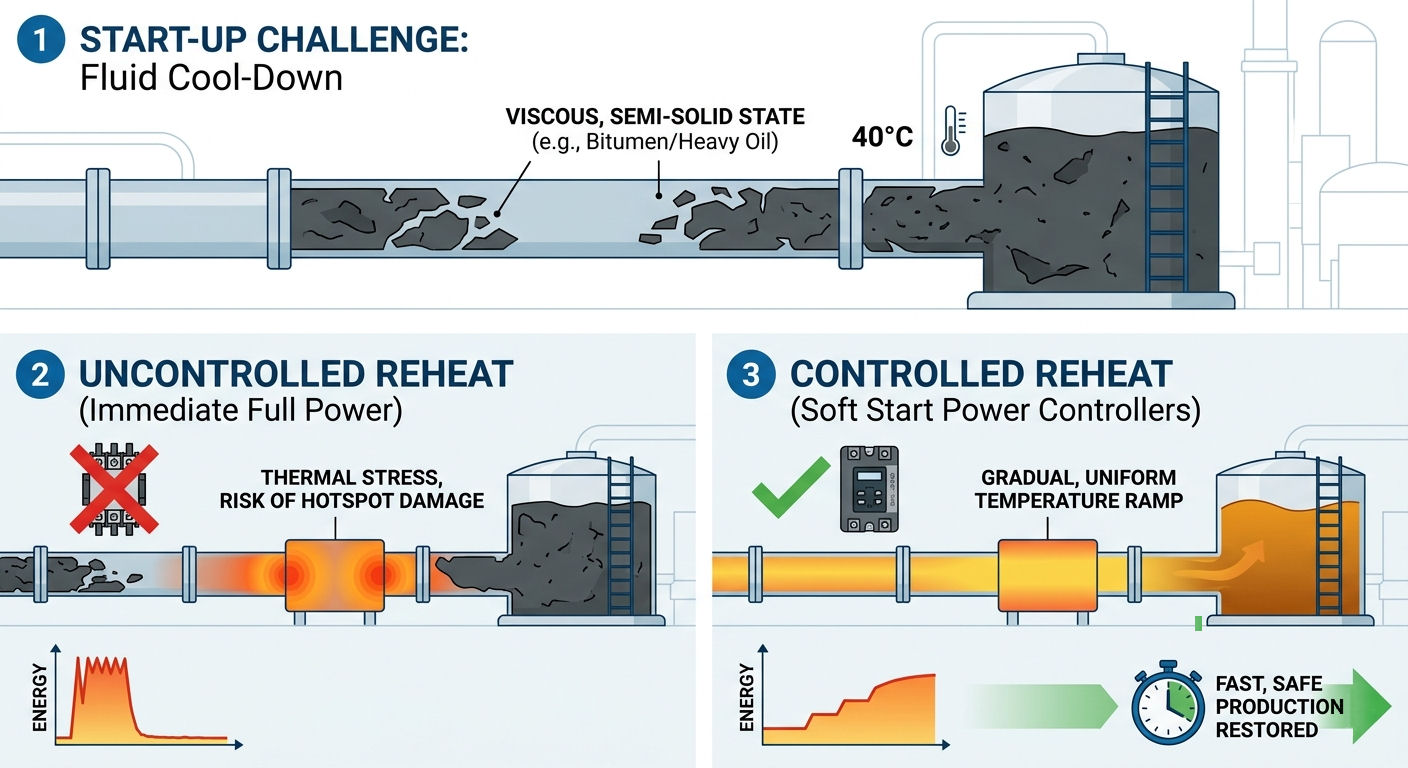
Start-up and restart phases present particular challenges in oil and gas operations.
After shutdown, fluids may have cooled significantly, increasing viscosity or causing partial solidification.
Reheating must be carried out carefully. Applying full power immediately can create thermal stress in the system and uneven heating.
Power controllers that support soft start and current limiting allow gradual energisation, helping restore temperature in a controlled and stable way.
This reduces stress on equipment and improves the likelihood of a smooth restart.
Downtime in oil and gas operations carries significant cost.
Heating system failures can interrupt flow, delay production and require intervention in challenging environments. Mechanical contactors used for switching heaters degrade over time due to electrical arcing and repeated operation.
As reliability decreases, the risk of failure increases.
Modern power control systems reduce this risk by eliminating mechanical wear points and providing early fault detection.
By identifying heater failures or abnormal conditions early, operators can take action before the issue affects the process.
This proactive approach helps maintain uptime and reduces the need for emergency intervention.
Oil and gas facilities often cover large areas, with heating systems distributed across pipelines, tanks and processing units.
Accessing equipment directly may not always be practical.
Modern power controllers provide real-time operational data, allowing engineers to monitor system performance remotely.
With remote access capability, operators can view system status, identify issues and respond more quickly, even without being physically present at the equipment.
This improves reaction time and supports more efficient maintenance.
Heating systems can represent a significant portion of energy consumption. Integrated energy monitoring and totalisation allow operators to track usage, identify inefficiencies and optimise performance across the facility.
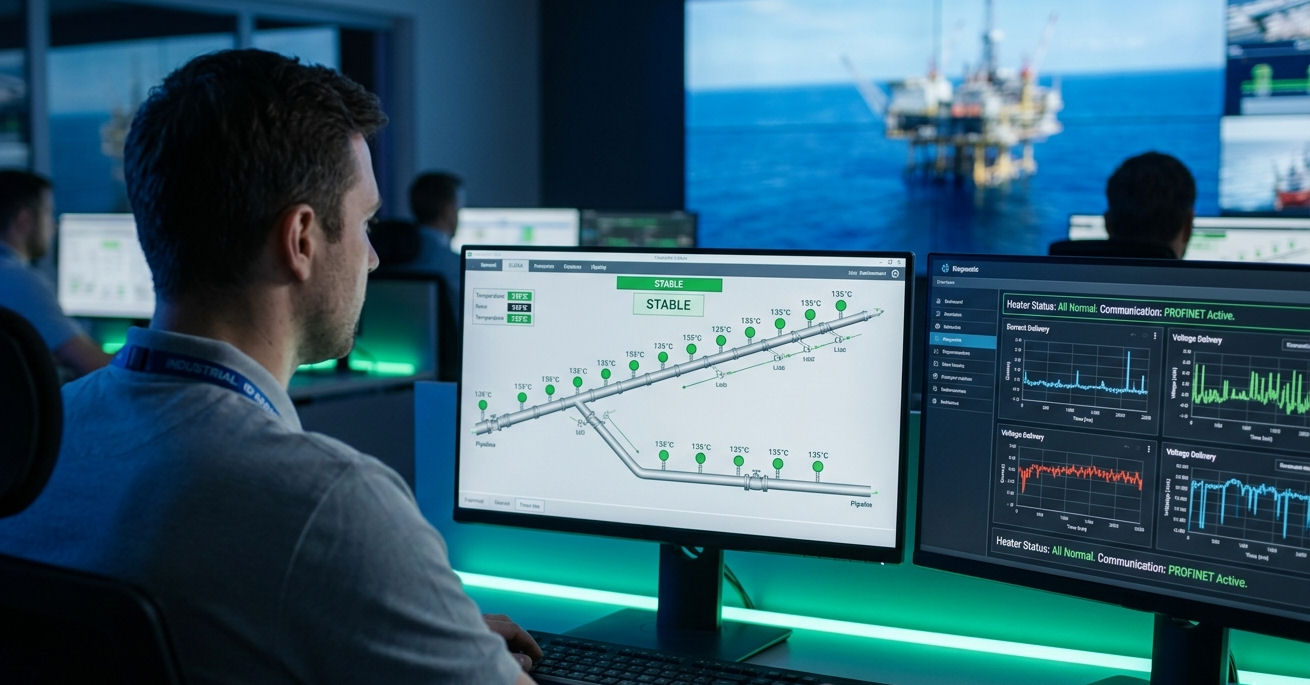
Heating systems must operate as part of a coordinated control environment.
Power controllers that support Profinet and Profibus integrate with PLC and SCADA systems, allowing heating performance, alarms and diagnostics to be monitored centrally.
This improves visibility, supports faster decision-making and ensures that heating systems operate in line with overall process requirements.
Glass production relies on coordinated control across multiple systems.
Stable heat delivery underpins flow assurance, process stability and operational safety in oil and gas applications.
By improving how power is delivered and monitored, operators can achieve:
In demanding environments where access is limited and downtime is costly, this level of control is essential.
Oil and gas applications require power control solutions that can operate reliably in challenging conditions while supporting stable and controlled heating.
Systems used in trace heating, tank heating and viscous fluid handling must deliver consistent performance and integrate with plant control systems.
CD Automation’s thyristor power controllers, including REVO S, REVO C and REVO RT, provide advanced firing modes, current limiting and diagnostic capabilities.
These systems deliver stable power control, early fault detection, energy monitoring, real-time visibility and seamless integration with industrial control systems.
This enables operators to maintain flow, improve reliability and optimise overall process performance.

If your oil and gas operation requires improved reliability, better flow assurance or greater visibility of heating performance, CD Automation can support you in selecting the most appropriate power control solution.
Contact CD Automation to discuss your heating application or arrange a technical review of your system.
Further application information can be found on our Oil & Gas Processing, Refining & Petrochemicals page.
Or contact our engineering team to assess your current heating control strategy.
Click the link in the page footer below to ‘Book a telephone callback’, or click the ‘Contact Us' button to request a no-obligation quotation, or simply ask a question. We're here to help.

