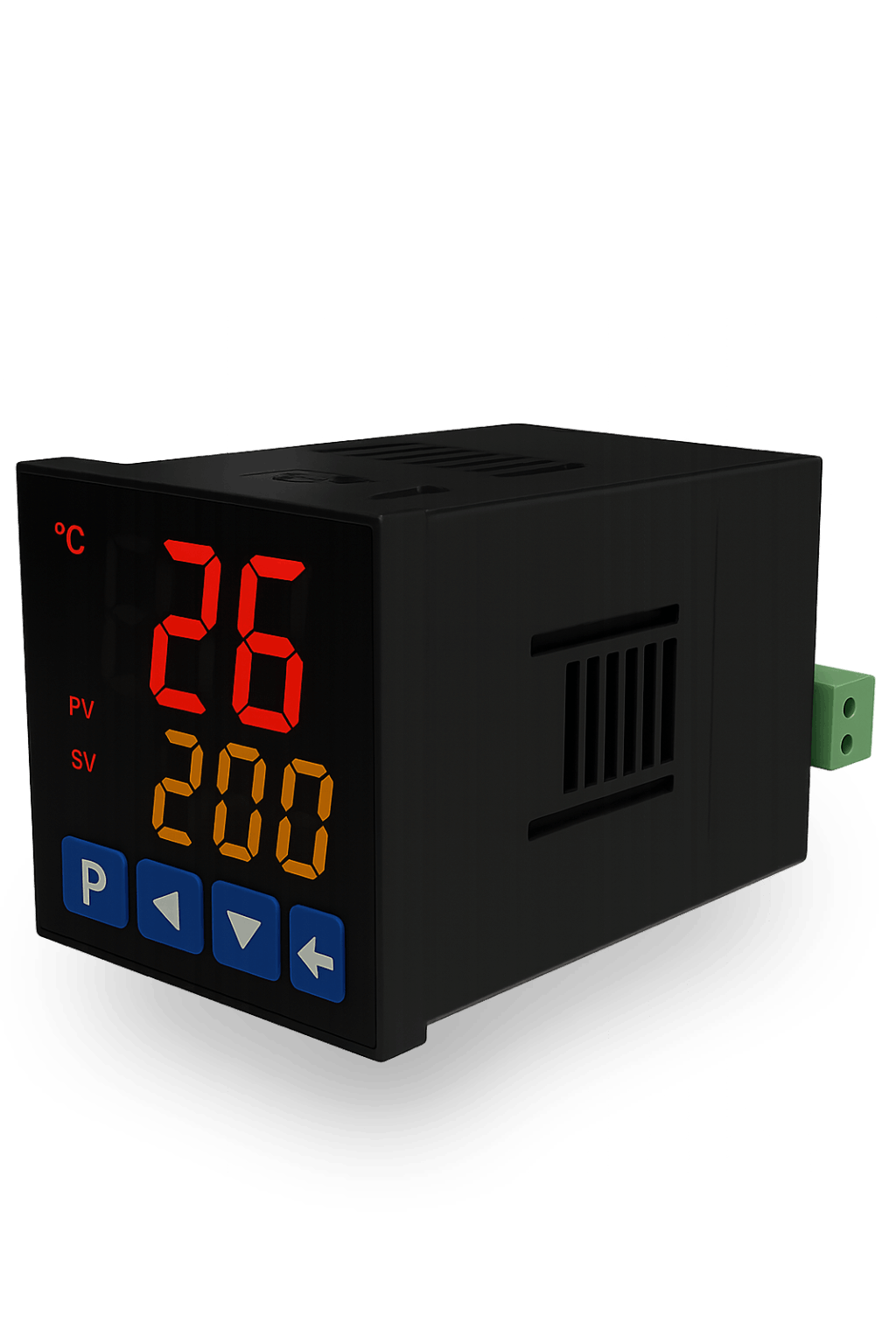
With more than 30 years of product, application and industry experience, we understand the needs of heat treatment processes and machinery. Our robust product range of temperature controllers and PID process controllers provide excellent control performance with a wide variety of functionality to suit all budgets. These controllers maintain process variables such as temperature, pressure, flow, and level within the desired range by utilizing control loops.
Our products are designed to monitor and control process variables, ensuring accurate and stable control of industrial processes.
Our most popular models are shown below so have a look and if you have any questions, or require something different, feel free to contact us for friendly help and assistance. We have a controller for every application from leading brands such as West, Delta, Emko, Lumel and CD Automation in single or multi-loop packages and every size format. These controllers allow you to set parameters around a set point, optimizing processes for stable control.
Additionally, our controllers offer system capabilities for various industrial applications, enhancing automation, control, and safety.
Please read our De-mystifying Temperature Controllers or PID Feedback Loop control article written by CD Automation for the PBSI.
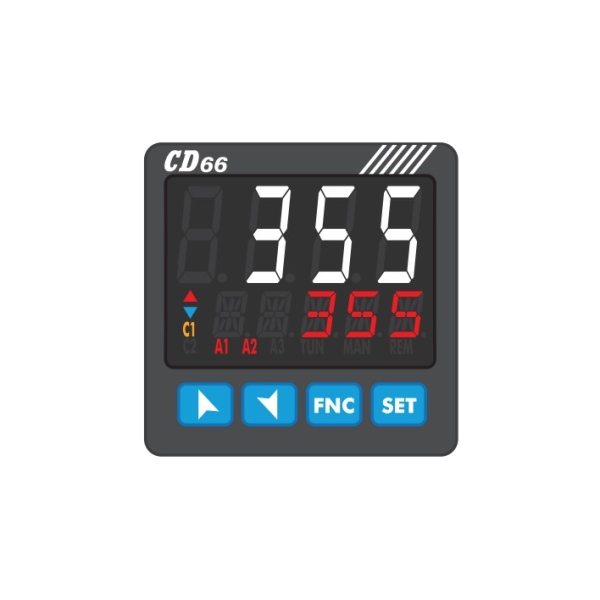
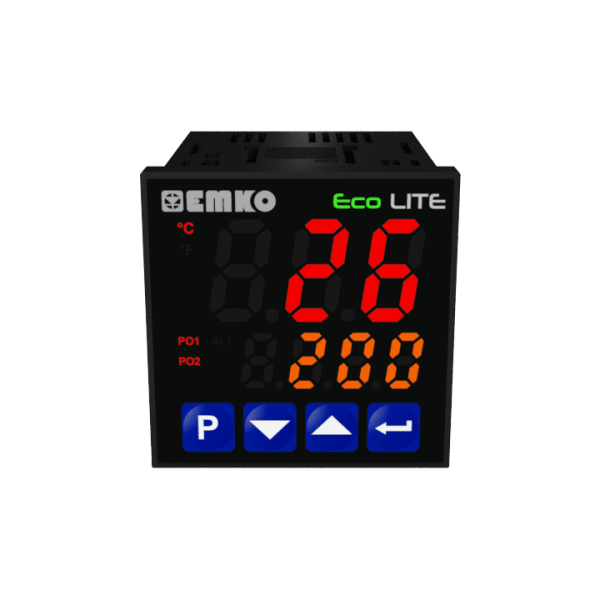
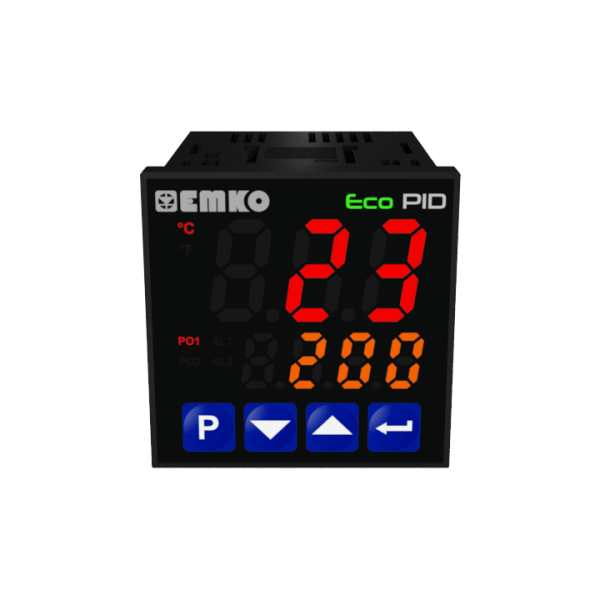
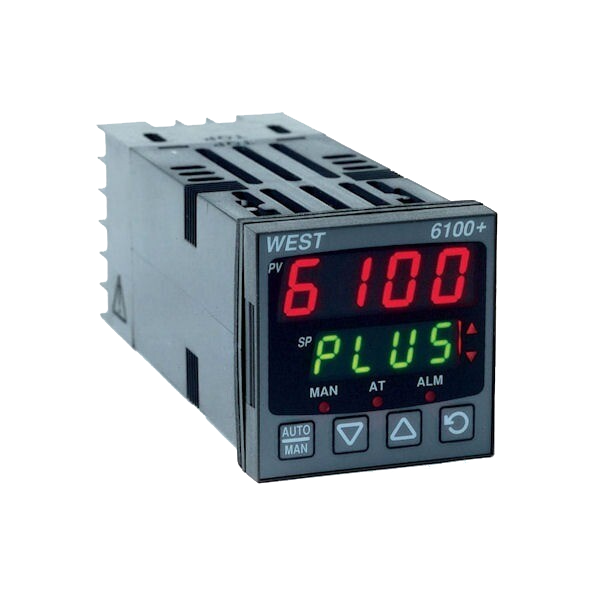
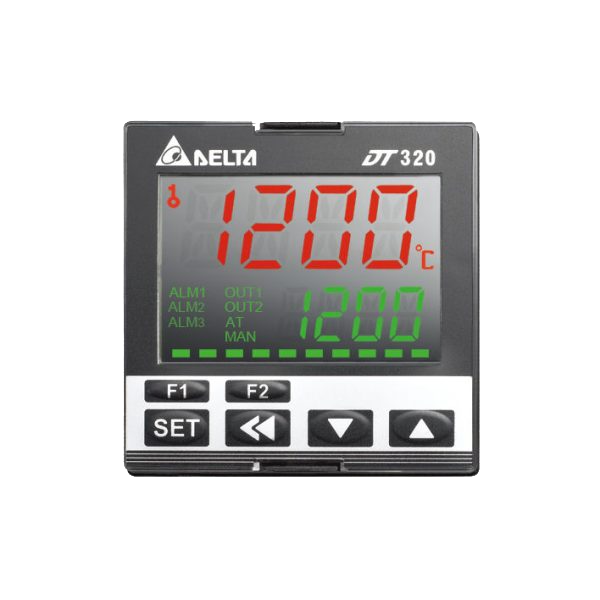
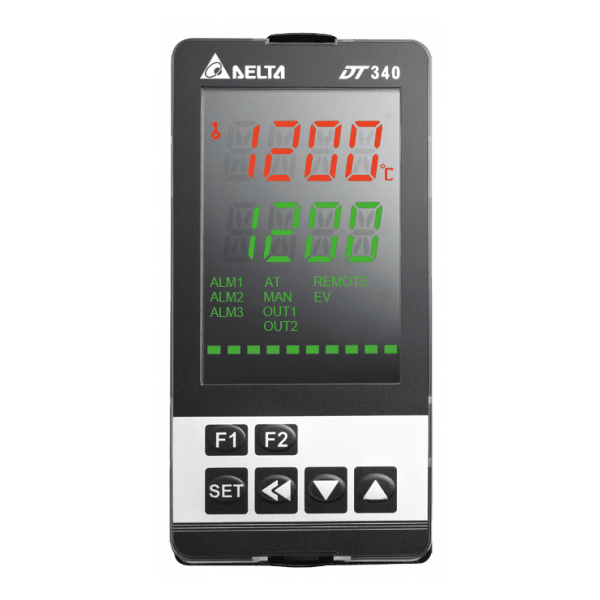
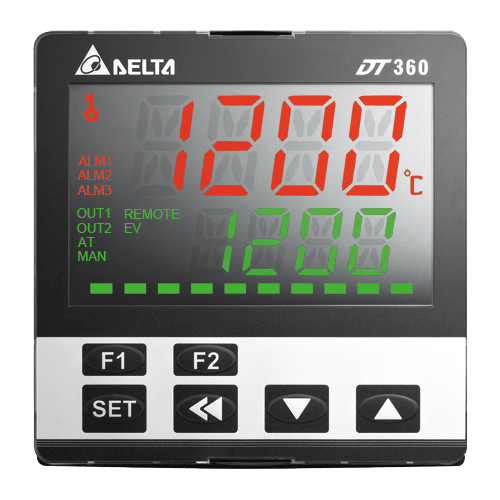
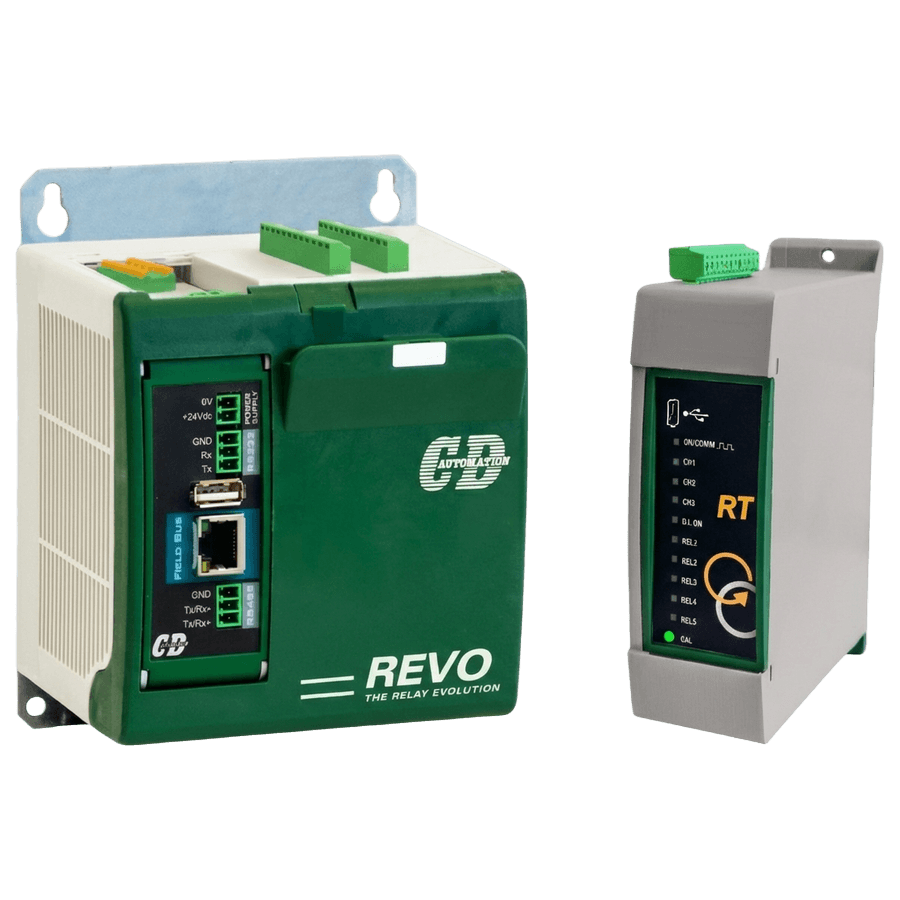
A temperature controller is an instrument that monitors a process temperature via a sensor input (typically a thermocouple or RTD) and automatically adjusts an output, such as a relay, SSR drive or analogue signal, to keep that temperature at a defined set point. Temperature controllers are used wherever a process needs to be held at a stable, repeatable temperature, from ovens and furnaces to plastics extrusion and laboratory equipment.
PID stands for Proportional, Integral and Derivative, the three calculations a controller uses together to manage a heating or cooling process accurately. The proportional element responds to how far the current temperature is from the set point, the integral element corrects for any long-term offset (known as steady-state error), and the derivative element anticipates how quickly the temperature is changing to prevent overshoot. Combined, these three functions allow a PID controller to reach the target temperature quickly and hold it there with minimal fluctuation, which is why PID control is the standard approach for most industrial heating applications.
On/off control simply switches the output fully on when the temperature drops below the set point and fully off when it rises above it, which causes the temperature to cycle above and below the target in a sawtooth pattern. PID control instead continuously adjusts the output in proportion to how close the process is to the set point, holding the temperature far more precisely and reducing wear on heating elements and mechanical switching components. On/off control is generally suitable for simple, non-critical applications where wide temperature swings are acceptable, while PID control is used wherever tight tolerance, product quality or energy efficiency matters.
Selecting the right temperature controller depends on five main factors:
For personalised guidance or to discuss your specific application requirements, please contact our expert support team on 01323 811100, or complete our online enquiry form. We’ll help you identify the ideal Temperature Controller solution for your system.

